LAB #4: VIDEOGAME POISON
Verotoxin (or verocytotoxin) is more often referred to as a Shiga toxin and is primarily produced by Shigella dysenteriae and some sub-groups of Escherichia coli. There are two types of toxins, Stx1 and Stx2, with distinct, structural, and chemical differences, but both are lethal to most organisms upon injection of either the toxin or a cell/ cell colony that produces the toxin.
 |
| Basic Structure of a Shiga Toxin |
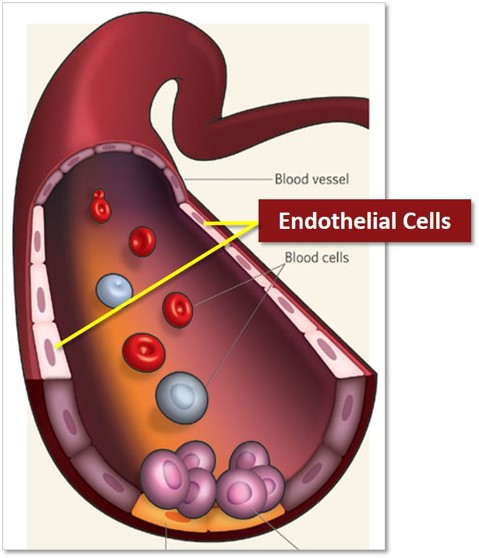 |
| Visual Definition of Endothelial Cells |
I specifically analyzed the protein for a B subunit from a type 1 Shiga toxin found in an Enterobacteria phage, the bacteria that, once inside E. coli, causes it to produce verotoxin (note that all 5 B subunits are identical). The accession code is: P69179.
 |
| Quaternary Structure of a Shiga Toxin Protein |
The amino acid sequence for this protein is:
1 mkktlliaas lsffsasala tpdcvtgkve ytkyndddtf tvkvgdkelf tnrwnlqsll
61 lsaqitgmtv tiktnachng ggfsevifr
The first ten amino acids by name are: methionine, lysine, lysine, threonine, leucine, leucine, isoleucine, alanine, alanine, and serine.
The genetic code for this protein is:
    1 atgaagaaga ccctgctgat cgccgcctcc ctgtccttct tctccgcctc cgccctggcc
       61 acccccgact gcgtgaccgg caaggtggag tacaccaagt acaacgacga cgacaccttc
      121 accgtgaagg tgggcgacaa ggagctgttc accaaccgct ggaacctgca gtccctgctg
      181 ctgtccgccc agatcaccgg catgaccgtg accatcaaga ccaacgcctg ccacaacggc
      241 ggcggcttct ccgaggtgat ctttcgctga
Sources
Protein Analysis:
Calderwood,S.B., Auclair,F., Donohue-Rolfe,A., Keusch,G.T. and Mekalanos,J.J.; Nucleotide sequence of the Shiga-like toxin genes of Escherichia coli; Proc. Natl. Acad. Sci. U.S.A. 84 (13), 4364-4368 (1987)
Information and first and third picture:
Trofa AF, Ueno-Olsen H, Oiwa R, Yoshikawa M. Dr. Kiyoshi Shiga: discoverer of the dysentery bacillus. Clin Infect Dis. 1999;29:1303–1306. [PubMed]
https://www.ncbi.nlm.nih.gov/pmc/articles/PMC4270005/
Second picture:https://www.cellapplications.com/endothelial


So essentially the Enterobacteria phage is kind of like a virus. obviously its a bacteria but similar to a virus in the way it infects the human cell, but then produces a toxin that cause lethal damage. so since it damages the lumen of the blood vessel, does this mean that it cuts of oxygen exchange from the oxygenated blood?
ReplyDelete